
.jpeg)


The Origins and Significance of Women's Month and International Women's Day
- Feb 25
- 3 min read
Every March, people around the world recognize Women’s Month and celebrate International Women’s Day. These observances honor the achievements of women, highlight ongoing struggles for equality, and inspire action toward a fairer society. But where do these commemorations come from? Understanding their origins reveals how far society has come and why these celebrations remain vital today.
The Early Roots of Women’s Day
The idea of a day dedicated to women’s rights emerged in the early 20th century amid rapid social and industrial change. Women were entering factories and public life in growing numbers but faced harsh working conditions, low wages, and limited political rights.
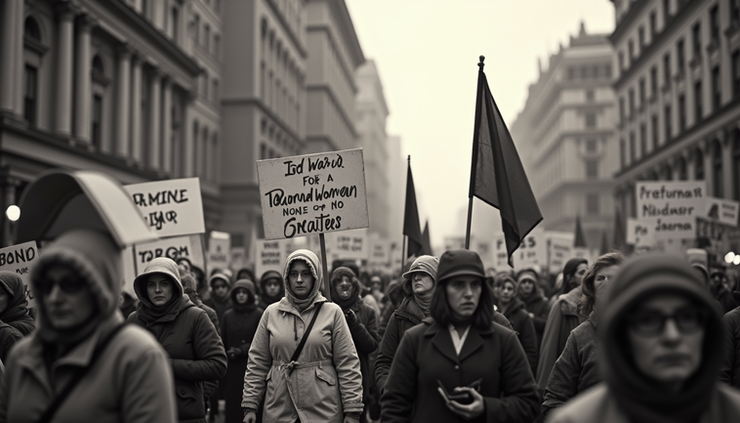
1908: A pivotal event occurred when 15,000 women marched in New York City demanding shorter work hours, better pay, and voting rights.
1909: The first National Woman’s Day was observed in the United States on February 28, organized by the Socialist Party of America to honor women’s labor activism.
1910: At the International Socialist Women’s Conference in Copenhagen, Clara Zetkin proposed an International Women’s Day to promote equal rights and suffrage worldwide. The idea gained unanimous support.
The first official International Women’s Day took place on March 19, 1911, in Austria, Denmark, Germany, and Switzerland. Over one million people attended rallies demanding women’s right to vote, work, and hold public office. The date later shifted to March 8, which remains the global standard.
Why March? The Significance of the Month
March was chosen partly because of its connection to spring, symbolizing renewal and hope. It also coincided with key historical events:
In Russia, March 8, 1917 (February 23 on the Julian calendar), women textile workers led protests that sparked the Russian Revolution and eventually led to women gaining voting rights.
The month became a natural time to celebrate women’s contributions and push for change as societies emerged from winter and looked forward to growth.
By the late 20th century, International Women’s Day had spread worldwide, recognized by the United Nations in 1977. The UN declared March 8 as a day to promote gender equality and women’s rights globally.
The Evolution into Women’s Month
While International Women’s Day focuses on a single day of recognition and activism, Women’s Month extends the celebration and reflection throughout March. This broader observance allows for:
Educational programs that explore women’s history and achievements.
Community events highlighting women’s contributions in arts, science, politics, and more.
Discussions on ongoing challenges such as gender pay gaps, violence against women, and representation in leadership.
Countries like the United States officially recognize March as Women’s History Month, a tradition that began in 1987. This month-long focus encourages deeper engagement and sustained awareness beyond one day.
Key Themes and Messages Over Time
The themes of Women’s Month and International Women’s Day have evolved to reflect current issues and goals. Some recurring themes include:
Equality and rights: Voting, education, employment, and legal protections.
Celebration of achievements: Highlighting women’s roles in history, culture, and innovation.
Solidarity and activism: Encouraging collective action to address discrimination and violence.
Intersectionality: Recognizing how race, class, sexuality, and other factors affect women’s experiences.
For example, recent themes have focused on women in leadership, ending gender-based violence, and promoting women’s health and education worldwide.
How People Celebrate Today
Around the world, Women’s Month and International Women’s Day inspire a wide range of activities:
Marches and rallies advocating for women’s rights and social justice.
Workshops and lectures on gender equality and women’s history.
Art exhibitions and performances showcasing women’s creativity.
Corporate and government initiatives promoting diversity and inclusion.
Social media campaigns sharing stories and raising awareness.
These celebrations create opportunities for reflection, learning, and action. They remind society that progress requires ongoing effort and that women’s voices must be heard.
Examples of Impact
The observance of Women’s Month and International Women’s Day has contributed to real change:
Increased political representation of women in many countries.
Legal reforms addressing workplace discrimination and violence.
Greater public awareness of gender issues.
Support networks and resources for women’s empowerment.
For instance, countries that actively promote women’s rights during March often see boosts in policy discussions and community engagement. Organizations use this time to launch initiatives that continue throughout the year.
Why It Matters Today
Despite progress, gender inequality persists globally. Women still face barriers in education, employment, healthcare, and political participation. Celebrating Women’s Month and International Women’s Day keeps these issues visible and urgent.
These observances serve as a reminder that:
Equality benefits everyone by creating fairer, more inclusive societies.
Women’s contributions shape culture, economy, and innovation.
Collective action can drive social change.
By learning about the origins and continuing significance of these celebrations, individuals and communities can better appreciate their role in advancing gender equality.


Comments